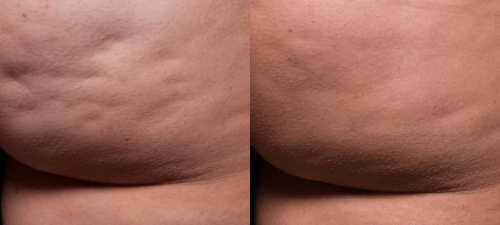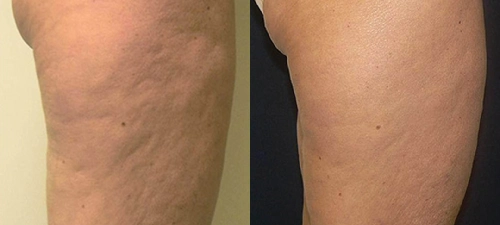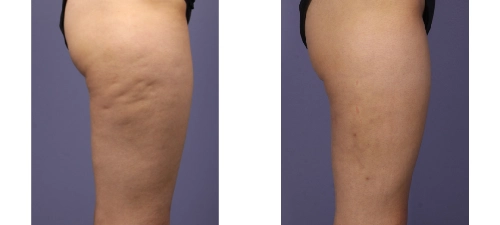
Radiofrequency for Cellulite & Skin Tightening
Radiofrequency (RF) technology delivers controlled thermal energy into the skin and underlying tissue to support collagen remodeling and improve skin texture. Depending on the technology, RF may use different energy configurations and treatment depths to address skin laxity and the appearance of cellulite dimpling.
RF may be used to improve the appearance of:
- Cellulite and skin dimpling
- Loose or crepey skin
- Skin laxity
- Uneven skin texture
- Selected areas of the thighs and buttocks
A typical session may take approximately 40 minutes, depending on the treatment area. Temporary warmth, redness, or sensitivity may occur. A course of treatments may be recommended, with the number and frequency determined according to the treatment area and individual response.
RF may also be incorporated into treatment plans for skin tightening of areas such as the face, eyelids, neck, and jawline, when clinically appropriate.
Subcision for Cellulite Dimples
While RF addresses skin texture and laxity, subcision may be considered for deeper cellulite dimples caused by fibrous septae tethering the skin.
During this localized procedure, the treatment area is numbed with local anesthesia and a specialized needle is used to release selected fibrous bands beneath the dimple. This allows the tethered skin to move more freely, with collagen remodeling developing during the healing process.
Temporary bruising, swelling, or tenderness may occur for several days. The number of sessions depends on the number and depth of dimples and the individual response to treatment.
Subcision is based on the same underlying principle as Cellfina® and may be combined with RF treatment when appropriate as part of an individualized cellulite treatment plan.
PRP – Platelet-Rich Plasma
PRP (Platelet-Rich Plasma) is prepared from a small sample of the patient’s own blood. The blood is processed by centrifugation to separate the plasma and concentrate platelets and growth factors. The resulting PRP is then carefully injected into selected treatment areas using very fine needles.
PRP is used in dermatology to support skin quality, tissue repair, and collagen remodeling. It may be incorporated into treatment plans for concerns such as acne scars, skin laxity, fine lines, and the delicate under-eye area. PRP may also be used as an adjunct to laser resurfacing and other skin treatments. Clinical studies have investigated its use alongside laser resurfacing for acne scars and for the appearance of tear troughs.
PRP is also used in hair restoration as an adjunctive treatment for certain types of hair loss, including androgenetic alopecia. It may support hair follicle activity and can be incorporated into a broader medical hair-loss treatment plan.
A PRP session takes approximately 30–40 minutes. Temporary redness, swelling, or bruising may occur at the injection sites. Treatment protocols vary, but a course may involve three sessions approximately one month apart, followed by maintenance treatments according to the patient’s condition and clinical response.
PRP may be considered for areas including the face, under-eyes, neck, hands, abdomen, and knees, as well as for selected hair-loss concerns. It may also be used as part of a treatment plan before or alongside laser resurfacing.
Pre-treatment recommendations may include temporarily avoiding certain medications or supplements that can increase bruising, where medically appropriate. Patients should always discuss prescribed medications and supplements with their treating physician before making any changes.
PRP involves the handling and reinjection of blood-derived material and should therefore be performed by appropriately trained medical professionals in a suitable clinical setting. As with any injection-based procedure, potential complications include infection, bruising, swelling, and other site-specific reactions. Individual suitability is assessed before treatment.