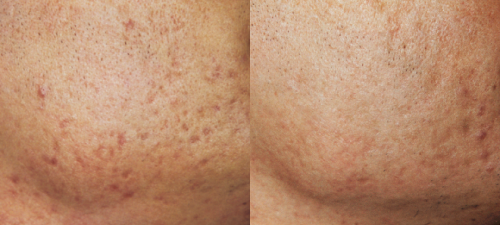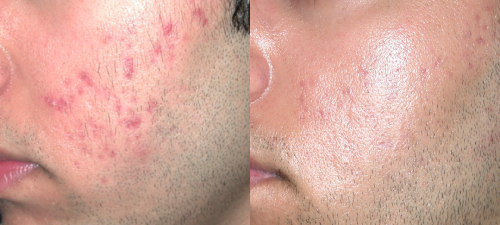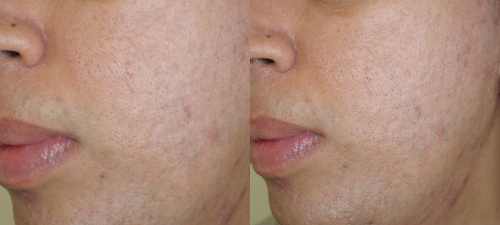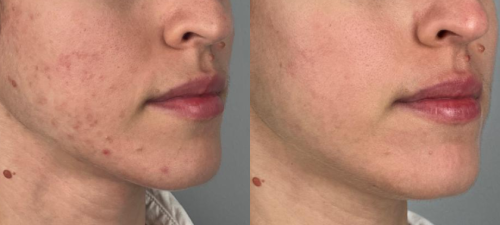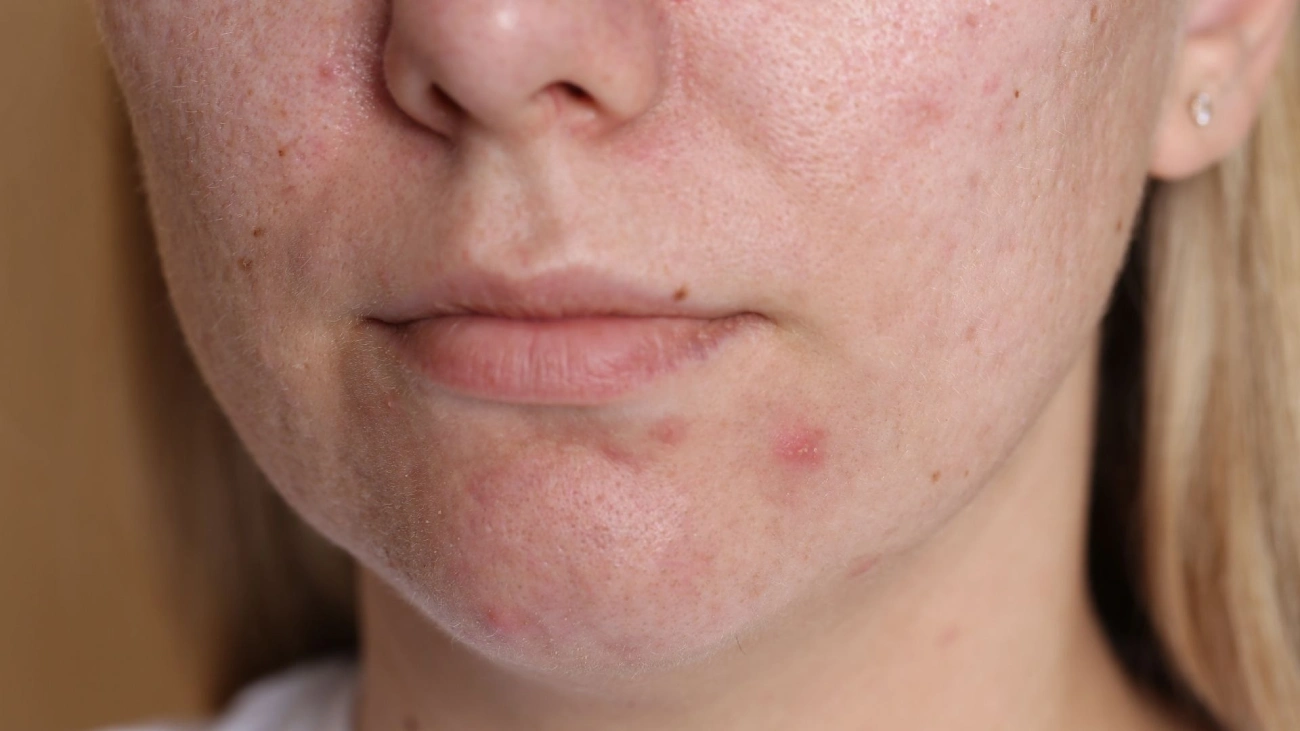
Dr Touma has the best experience in treating acne scars.
Scars can develop as the result of acne or other types of inflammatory problems of the skin, such as infections, chickenpox, surgery or trauma. Rarely, but more commonly in darker skin types, scars can develop spontaneously. Most scars improve with time. However, early intervention may affect the way a scar remodels itself and may minimize its appearance.
Red raised scars respond well to lasers that decrease their blood supply, which leads to a lighter, flatter and softer scar after being combined with fractional laser and Kenalog application. Sometimes injections of steroids and occlusive dressings are good adjuncts to improve results.
Depressed scars come in different varieties. Those that have sharp edges (some acne scars, some surgical scars) are either treated with a resurfacing laser to smooth out the edges, or the scar is removed surgically and re-sutured properly. Scars that have soft edges (typically acne scars) are best filled using injection of a filling agent or by stimulating production of one’s own collagen below the scar to elevate it. This is also done precisely using laser treatments referred to as “collagen laser” or non-ablative resurfacing. Subcision is a surgical method that involves numbing the skin with local anesthesia, and then breaking the scar using a special needle. This technique not only breaks the fibers of scars tissue that depress the skin, it also stimulates new collagen formation that elevates the scar.
Some bruising and swelling develop for a few days after the treatment. More than one treatment session is needed for best results.
A combination treatment is the recommended approach to obtain the best results.