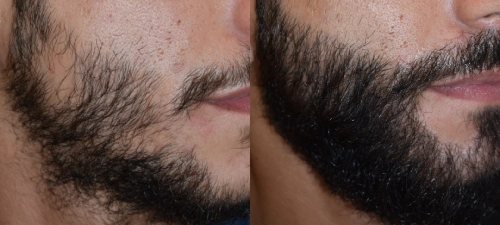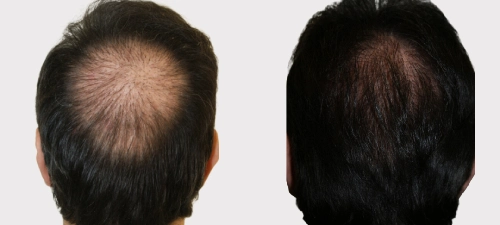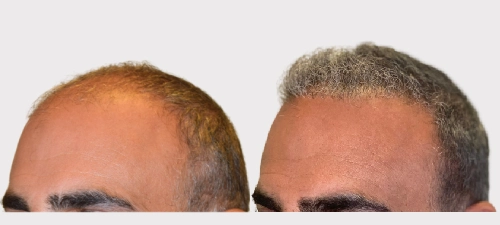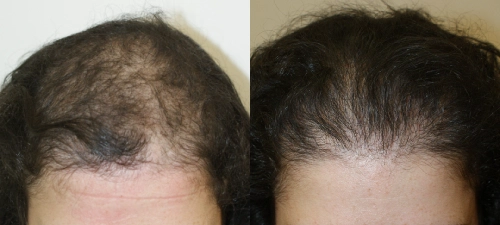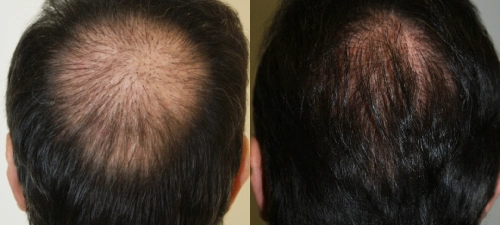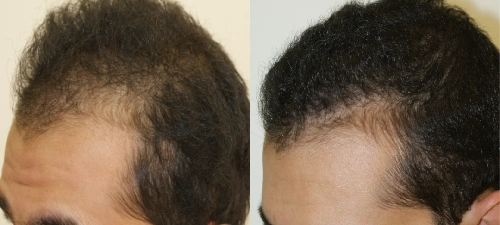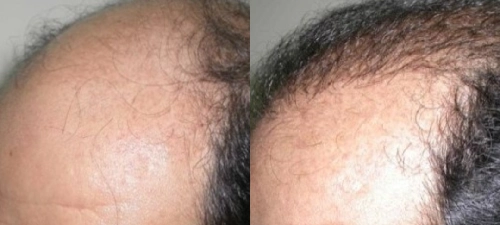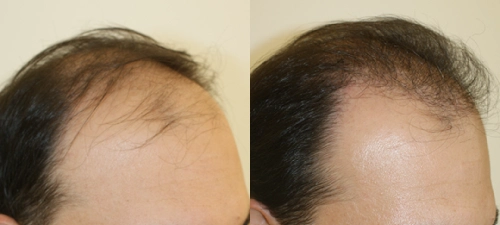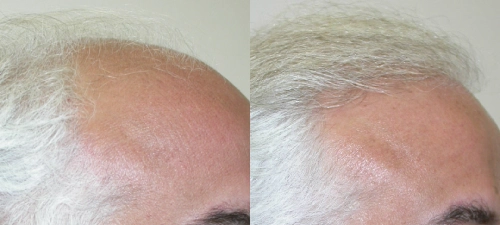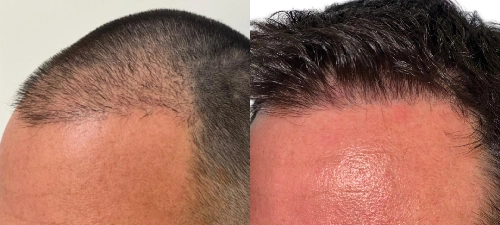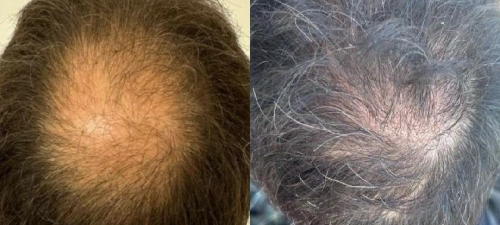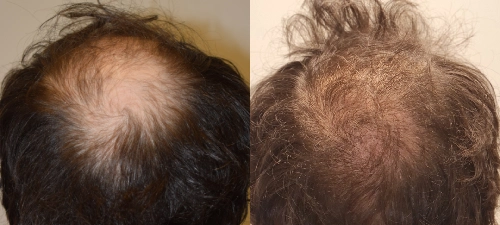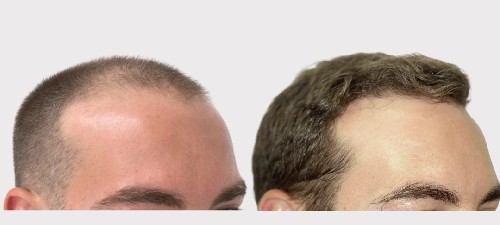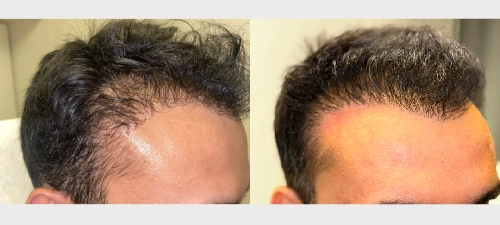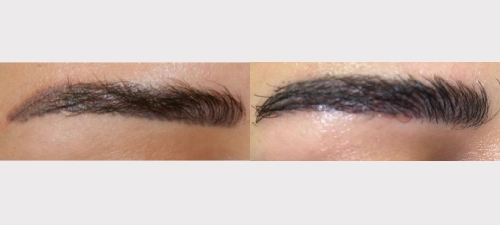
Half the hair transplantation process is technique and maintenance treatment, and the other half is the hairline design that has to be extremely artistic. I sometimes see patients of mine that have such a natural result I even can not tell they had a transplant! On the other hand so many unfortunate men and women go commercial and by trying to save money, they are stuck with a horribly artificial-looking hair over their head, or poor results.
– Dany Touma, M.D.
Artas Robotic Hair Transplantation
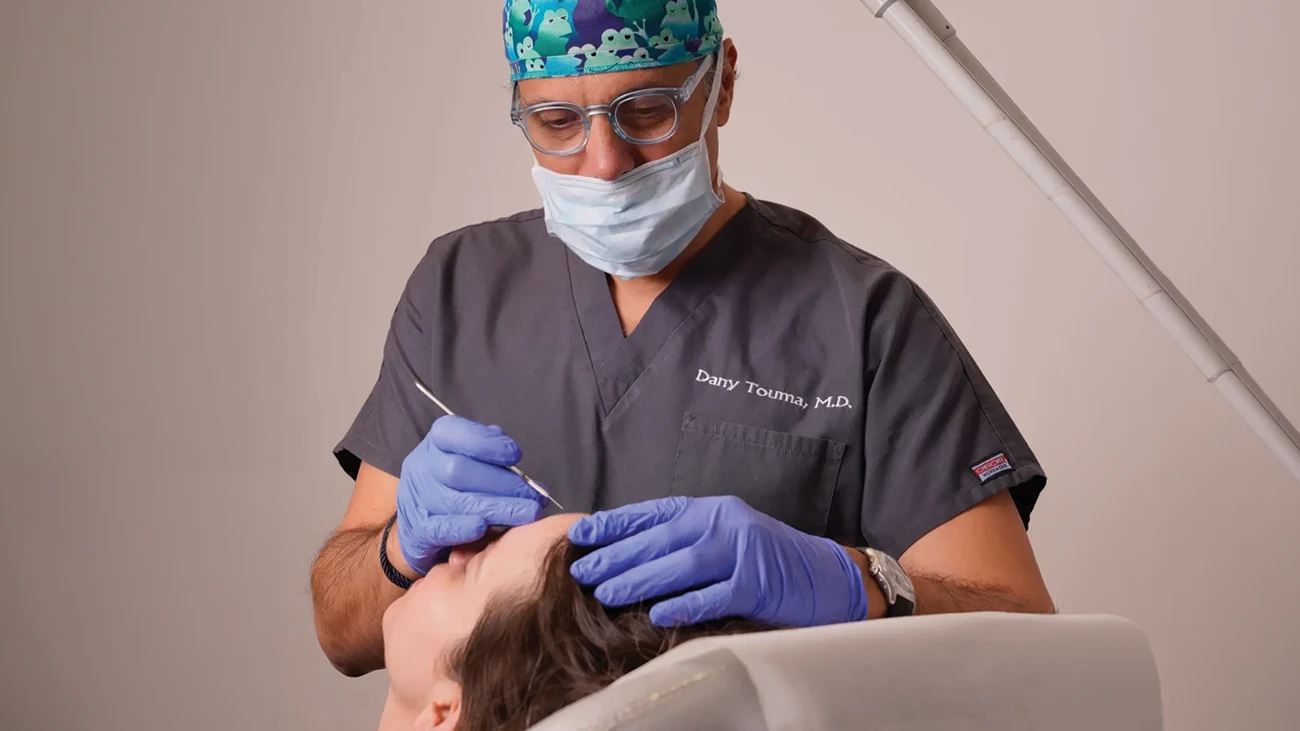
Dr. Touma, founder of The Skin Clinic, is proud to have had the first robotic device for follicular unit extraction (FUE) automated hair transplantation in the Middle East at TSC in Beirut. The Artas® Robotic Hair Transplantation device allows physicians to give patients a permanent, fuller younger look while eliminating any drawbacks that may be associated with traditional transplant methods. In this minimally invasive procedure, each hair is targeted individually with robotic precision, adjusting for the angle and hence, avoiding the donor area long visible scar of strip surgery and replacing it with tiny scars that are much less visible.. Robotic hair transplant allows the graft quality to remain consistent throughout the procedure. However in the last few years, Dr. Touma and his team have perfected manual harvesting in a way that is as good as the robot while gaining speed and sparing the cost of the device.
Manual Hair Transplantation Using Strip and FUE
Dr Touma and his team uses the most refined implantation techniques to provide superb results for even the most challenging cases and areas including eyebrows, beard, and mustache or scarred areas.
The hair is taken from the back of the scalp where hairs are usually abundant, as tiny follicular units (FUEs) that are extracted one at a time. In some cases where it is in the best interest of the patient, for example women or men with long hair who cannot shave their head for the FUE procedure to be
performed, a strip is shaved from this area without shaving the head, leaving an almost invisible scar only 1mm wide. The hairs are then prepared and separated under the microscope and reimplanted into the balding areas in the form of micrografts. Dr. Touma and his team specialize in micrografting, which is the implantation of single hairs one at a time to obtain the most naturally looking hairline. The whole procedure is done under local anesthesia and with very little inconvenience post operatively. One or two sessions are generally enough for most people. The eyebrows, beard, and mustache, sideburns (especially after face lift surgery) and other areas of the body as well as hair loss from burns and other scars can be treated.
Donor Site
Selecting a good donor area is very important for a successful transplant. Hairs are usually taken
from the back of the scalp which is not subject to hair balding, and will re-grow back to normal length after the procedure. When the donor area is limited or has been harvested to a limit where further harvesting may cause depletion, the beard area under the chin is used as a donor.
Strip versus FUE
Traditional hair transplantation involves removing a strip of permanent hair-bearing skin from the donor site. The strip is closed in a most refined way with sutures and heals as a very thin line of approximately 1 mm that is covered by hair 3 mm or longer.
Follicular Unit Extraction (FUE) is a technique whereby hair is removed from the donor back area of the scalp using a very small punch technique, instead of removing a strip. The donor area heals with no linear scar, and only small white points remain, that are covered with hair 1 mm or longer. Dr. Touma has the expertise and refined technical skills to perform both strip and FUE techniques, the preference of which is determined on a case by case basis. FUE is a preference for patients who don’t want a scar in the back of the head or are surgery-phobic, and is now by far the chosen technique for men and women.
No Shave FUE
No shave FUE is a technique that allows patients to have FUE without shaving their head totally. Small areas of the scalp are shaved and are scattered throughout the donor area in the sides and back of the head. The FUE’s are delicately removed, and the long unshaved hair covers those areas. Up to 800-1000 grafts can be removed this way, which is sufficient for smaller transplant cases. For larger cases, the no-shave FUE technique can be repeated monthly over time to achieve a large number of transplanted hairs.
Do it right the first time
Many commercial hair transplantation centers advertise heavily, promoting very cheap fees. Patients often travel to these countries and return with unsatisfactory results, due to poor technique or wrong hairline placement or both, leading to a ’transplanted look’. If it sounds too good to be true, it usually
- A hair transplant is a lifetime decision, and will last forever. Good medicine is costly, particularly when technology is involved. Dr. Touma has not only perfected the technical and medical aspect of personalized hair restoration, he has a keen sense of elegance that will guarantee you a very natural hair transplant, at fees that are very reasonable compared to other world class practices. Patients are usually looking so natural, even hair transplant surgeons cannot guess they had any work done and this is priceless!
Also Dr. Touma and his team design a long term customized treatment plan to ensure natural long term results using a combination of topical and oral treatments and injections of PRP or exosomes.
Repairing past hair transplants is an expertise
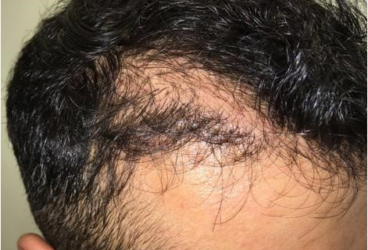
This patient was treated in a commercial center in another country and was given a low hair line that is too low and wide without taking into account the continuous aspect of hair loss. He is seen 1 year later with an unnatural appearance and urgently needs another procedure.
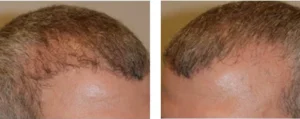
This patient, treated in Turkey, had implants in the temples. On his right side the hair line unnaturally low, on the left side, no hair grew.